“From its opening moments, the music invites the listener into a carefully imagined world, one where jazz drifts effortlessly into folk, classical writing and cinematic atmospheres, guided by a sense of narrative as much as by rhythm or form. What unfolds is not merely a collection of pieces, but a coherent soundscape, animated by curiosity, imagination and a quiet sense of wonder.” – paris-move.com
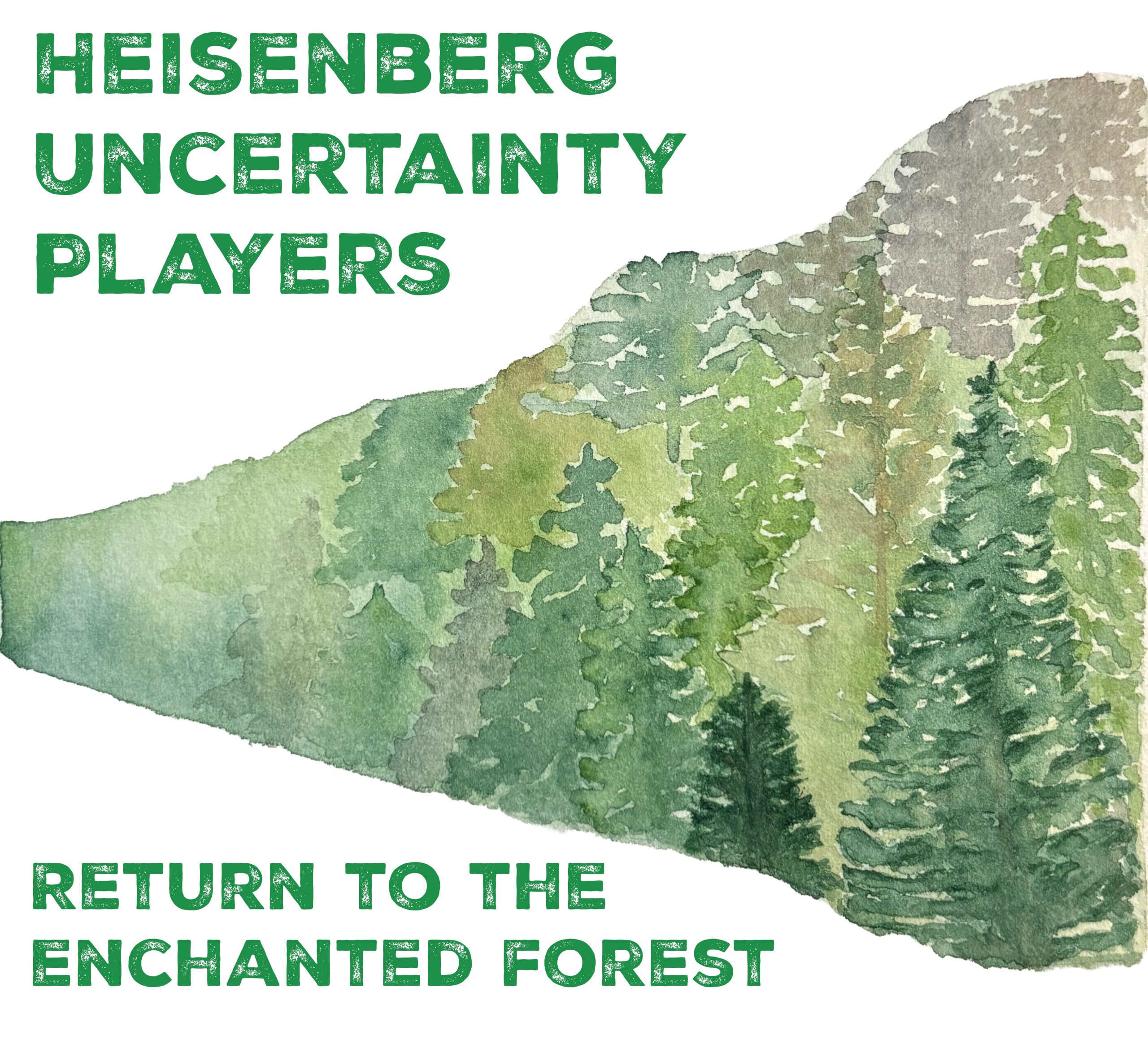
Heisenberg Uncertainty Players’ Return To The Enchanted Forest is loosely built around the theme of memory and how memories evolve over time. By using catchy melodies and hooks, trance-inducing grooves, haunting reverb, and twisted arrangements of two well-known pop music classics, these eight tracks offer a unique, poignant, and accessible depiction of thoughts remembered and distorted. Six of the album’s eight tracks were composed by HUP’s leader and founder, John Dorhauer, and the other two are Dorhauer’s arrangements of songs by Backstreet Boys and Wilson Phillips. Many of the originals were inspired by Dorhauer’s recollections of childhood memories and how these memories have morphed and become distorted over time. In doing so, these memories have taken on lives of their own, and the music abstractly depicts this journey through time. For example, the album’s opening track, “Catalpa”, was inspired by a memory Dorhauer has of a 5th grade homework assignment where he was tasked with identifying the species of a tree outside the school’s main entrance. By developing and distorting the song’s foundational motif (played at the beginning by the bass) amidst an increasingly cluttered texture, the music reflects on the random specificity of memories and their unpredictable staying power. Other tracks, such as “Echolocation” and the two-part closer “At What Point Does A Pillow Become A Cushion?”/”Threshold”, use sustain, reverb, and both acoustic and digital effects to create a warm chamber of sound that facilitates a contemplation on the life cycle of a memory.
HUP’s music features a unique blend of accessible melodies and grooves as well as refreshingly unexpected twists of harmony and structure, and this reflects Dorhauer’s broad musical eclecticism. The yearning, unending quality of Dorhauer’s melodies borrows heavily from late Romantic Era composers such as Mahler, Wagner, and Brahms. The unorthodox approach to form is reflective of Dorhauer’s interest in both classical and art rock music. The catchy grooves and riff-based approach to songwriting demonstrates Dorhauer’s affinity for rock and pop music, while its harmonic sophistication borrows heavily from jazz and neo-soul styles. Every track on Return To The Enchanted Forest reflects these myriad influences and is true to Dorhauer’s postmodern musical vision of blurring genre and generational boundaries.
Return To The Enchanted Forest is also an emphatic demonstration of HUP’s communal cohesiveness and individual mastery. HUP has performed each of the tracks on this album live numerous times over the past few years, and the ensemble’s collective interpretation of Dorhauer’s music has become refined through this extensive performance. Although Dorhauer has written or arranged over one hundred pieces for HUP since their last studio album (2020’s Gradient), the songs on this recording have elevated themselves as the band has brought them to life. Because of HUP’s steady devotion to live performance, they were able to record these eight songs plus an additional eight for a future recording over a whirlwind two-day recording session. The recording process for this album was exhilarating, and it is only because of the group’s organic musical rapport and cultivated ensemble blend that the recording process went so efficiently. The uniqueness and virtuosity of HUP’s individual members is vital to HUP’s nuanced tapestry, and the skill and individuality of everyone’s improvised solos is an integral component in the aesthetic of HUP’s music.

Released January 30, 2026
Composer, Conductor: John Dorhauer
Natalie Lande – alto saxophone, Kelley Dorhauer – alto saxophone, Sam Pilnick, tenor saxophone, Matt Zmuda – tenor saxophone, James Baum – baritone saxophone, Josh Torrey, Andrew Meyer, Dominic Gaietto – trombone, Dan DiCesare – bass trombone, Grace Mulvey, Jonathan McQuade, Bennett Heinz, Emily Kuhn – trumpet, Chris Parsons – guitar, Stuart Seale – piano, Dan Parker – bass, Ethan Bouwsma – drums
Producer: John Dorhauer
Recording Engineer: Andy Shoemaker
Mix Engineer: Brian Schwab
Mastering Engineer: Brian Schwab